Dealert - Track Product Sales
- 3.8
- Rating
- 10.00K
- Installs
- Free
- Price

 Analysis by App-foxy
I usually approach deal-tracking apps with a little caution. “Never miss a deal” sounds useful, but the real test is whether the app helps me make a buying decision without creating another stream of noise to manage. Dealert – Track Product Sales is a free shopping app from Kevin Foreman that takes a focused approach: it is designed for people who want to keep an eye on product sales rather than repeatedly search the same stores themselves.
After spending time with it, I see the appeal most clearly for planned purchases. If I know I want a particular item but do not need it immediately, a tracker can be more practical than checking retailer pages every few days. Dealert is also light enough to feel approachable, with an Everyone content rating and support beginning at Android 6.0. Its current version is 1.5.2, so it is a relatively compact tool rather than a large shopping platform packed with unrelated services.
My overall impression is mixed but positive. The app has a useful idea at its center, and its average rating of 3.8 from roughly a hundred ratings suggests that users have found value in it while also encountering some rough edges. I would recommend trying it if you shop around sales and can tolerate a straightforward, possibly limited experience. I would not treat it as a complete replacement for retailer apps, price-history tools, or careful manual comparison.
You May Also Like

 AccuWeather: Weather Radar
AccuWeather Review: A Quick, Clear Forecast for Everyday Decisions
For everyday plans, the best forecast is the one you can understand quickly. AccuWeather makes rain timing, radar, and local conditions easy to act on, with a few trade-offs.

 Hill Climb Racing
Why Hill Climb Racing Still Turns Crashes Into One More Run
A tiny car, a bumpy hill and one more upgrade: Hill Climb Racing keeps resurfacing because its simple chaos makes every near-miss feel personal.

 AliExpress - Shopping App
AliExpress Makes Global Shopping Feel Personal, but Shoppers Bear the Risk
AliExpress turns a global marketplace into a pocket-sized discovery engine. Its reach is useful, its shopping loop compelling, and its trade-offs easy to miss.

 Lords Mobile: Kingdom Wars
Lords Mobile Is a Kingdom-Building Routine, Not a Quick Match
A case-by-case verdict on the building, battles, device demands, and social commitments that make Lords Mobile rewarding for some players and exhausting for others.

 PDF Scanner app - TapScanner
TapScanner Makes Paperwork Easier to Capture, Check, and Share
TapScanner makes scanning with a phone feel less like a rescue operation and more like a dependable step in getting work done. Its capture tools are useful, though not flawless.

 Block Blast!
 Shows How Much a Puzzle Game Can Leave Out
A quiet grid game shows why puzzle players increasingly value instant clarity, repeatable skill and low-pressure play—and where the genre still needs to catch up.
More From Our News Desk
View All News


How Dealert fits into everyday shopping
I find Dealert most useful when shopping is a shared household task but the purchase itself still needs a clear owner. In this section, I’ll look at how a personal watch list can fit around common errands without assuming the app provides family accounts or shared controls. That distinction matters, because a little coordination can help, while shared sign-ins can blur whose preferences and purchase decisions are involved.
A practical tool for purchases that can wait
The strongest use case is a product that is desirable but not urgent. I might want a new accessory, household item, or gift, yet feel no need to buy it at the first available price. Instead of relying on memory, I can use Dealert as a reminder to keep that purchase on my radar. That small change matters because many missed discounts happen when people forget to check, not because they refuse to compare prices.
A realistic routine would be to add a product before a birthday, a seasonal shopping period, or a planned home project. I would then continue with my normal day and let the tracking workflow support the decision later. The benefit is not simply finding a lower number; it is creating a little distance between wanting something and paying for it. That makes the app more useful for deliberate shoppers than for people who enjoy browsing deals for entertainment.
There is also a useful distinction between tracking and buying. Dealert belongs on the tracking side. I would still open the retailer’s page before paying, check the final total, review delivery details, and confirm that the item is the exact model I intended to purchase. A sale notification or price change is a prompt to investigate, not proof that the offer is automatically the best available option.
Where it differs from ordinary retailer apps
Retailer apps are usually built to keep me inside one store. They may offer saved items, wish lists, loyalty benefits, and notifications, but their view is naturally limited to that retailer’s inventory and pricing. Dealert is more appealing when my attention is spread across products rather than one particular shop. I can think about the item first and use the tracker as a way to follow the purchase opportunity.
That said, a retailer app can still be better when I already know where I want to buy. Store-specific tools often provide clearer stock information, shipping estimates, pickup options, and account benefits. Dealert should therefore sit earlier in the process: it can help me decide when to investigate, while the retailer remains the place where I verify the transaction.
It also differs from a general shopping browser. Browsing apps are good for discovering products, reading recommendations, and comparing many pages in one session. Dealert’s value is narrower and potentially calmer. Rather than encouraging constant browsing, it supports a watch-and-wait habit. For me, that is a strength, although shoppers who want extensive discovery tools may find the experience too focused.
What the current release tells me
The app was released on December 2, 2018, and the current version is 1.5.2. Those details give the product some history, but they should not be mistaken for evidence of a particular modern feature set. I would judge the current release by what it actually lets me do today, not by assumptions about how shopping technology has evolved around it.
Its modest scale is reflected in the installation figure of over ten thousand. That does not make the app unworthy of attention, but it does set expectations. I would approach it as a focused utility with a smaller user base, not as a major marketplace with the depth, coverage, and polish that come from enormous adoption.
The developer, Kevin Foreman, has kept the concept easy to understand: track product sales and make it easier to notice a buying opportunity. The simplicity is welcome when I want a quick shopping aid, but it also means the app’s usefulness depends heavily on how reliably its tracking process fits my products and shopping habits.
Changes, stability, and the user experience
Version 1.5.2 is the release I would evaluate before deciding whether to keep the app installed. A version number by itself does not explain every change, so I would avoid claiming that it introduced a particular feature or fixed a specific problem. What I can say is that the current release should be treated as the practical baseline for new users, while long-time users may notice that the experience is shaped by an app with several years of history.
That history can be a benefit. Mature apps sometimes have a more settled purpose than newer shopping experiments, and Dealert does not need to persuade me with a crowded set of tools. It can concentrate on the simple act of following a product. At the same time, an older product concept may feel less flexible than newer alternatives that combine alerts with price histories, retailer coverage, or richer product information.
For someone already using the app, the main question is whether it has become a dependable part of a shopping routine. If it helps me remember which items I am waiting for, it can save repeated searches and reduce impulse purchases. If I still need to check every retailer manually because the tracked information is not enough to make a decision, its role becomes smaller but not necessarily useless.
How I would use it without creating notification fatigue
My first tip is to track only purchases that meet a clear condition. For example, I might wait for a meaningful sale on an item I have already researched, rather than adding every product that catches my eye. This keeps the list purposeful and makes any alert easier to interpret. A tracker becomes less valuable when it turns into a second inbox full of vague possibilities.
My second tip is to separate “want” from “need.” For a necessary purchase, I would set a personal deadline and use Dealert as one input, not as a reason to delay indefinitely. For a nonessential purchase, waiting for a sale makes more sense. This simple distinction prevents the app from encouraging me to buy merely because a price changed.
My third tip is to verify the product identity carefully. Similar names can hide differences in size, color, bundle contents, generation, or included accessories. When an alert appears, I would compare the exact item and the final checkout cost with another source. A lower displayed price can be misleading if it refers to a different configuration or excludes costs that appear later.
A fourth practical habit is to review tracked items after a shopping project ends. If I was watching something for a gift or a home repair, I would remove it once the purchase is complete or no longer relevant. This keeps future alerts connected to real decisions and makes the app feel like a useful list rather than permanent background clutter.
What the app does well for existing users
The most convincing strength is its narrow purpose. I do not have to turn a price-watching task into a full shopping session. That is valuable for people who already know what they want and simply need help waiting for a better opportunity. The app can also support a more disciplined approach to spending by encouraging me to pause before purchasing at the first price I see.
Its free starting price lowers the barrier to trying that workflow. There are in-app purchases priced at $4.99 per item, so I would pay attention to where those purchases appear and whether the free experience is enough for my needs before committing. The important practical point is that “free” does not necessarily mean every part of the experience is unrestricted. I would test the basic tracking process first and make sure it handles my usual products.
The Everyone age rating also makes it suitable for a broad household audience from a content perspective. Parents, students, and older shoppers can all understand the basic idea without needing a specialized shopping background. That does not remove the need for normal online-shopping caution, especially when following external product pages or entering payment information elsewhere.
Where I still feel friction
The first limitation is that a deal tracker is only as useful as its product coverage and update behavior. If the item I care about is not represented in a useful way, the app cannot replace direct research. I would not install it expecting every retailer, marketplace, or product category to behave consistently. My experience with any tool of this type would depend on the exact items I shop for.
The second limitation is interpretation. A price alert can tell me that something changed, but it does not automatically tell me whether the offer is good. I still need to check the seller, condition, shipping, returns, warranty, and product version. This is especially important for electronics, branded goods, and bundles where a superficially attractive deal may not match the item I originally researched.
The third issue is opportunity cost. If I already use a retailer’s wish list, a browser extension, or a dedicated price-history service that covers my preferred stores, adding Dealert may create duplicate reminders. In that situation, the simplest system is often the best one. I would keep Dealert only if it tracks something my existing tools do not handle well or if its workflow feels noticeably easier.
I would also skip it if I need a full shopping assistant with detailed reviews, stock monitoring, delivery comparisons, coupon automation, or a broad marketplace experience. The app’s central idea is useful, but that does not make it a universal answer for every stage of online shopping.
Who should try it, and who should choose something else
I think Dealert is a good fit for patient shoppers, budget-conscious households, gift planners, and anyone who repeatedly checks the same product pages. It is particularly sensible when the purchase is flexible and waiting has a real financial benefit. The free entry point makes experimentation easy, provided the available tracking workflow matches the products I care about.
I would be more cautious if I shop mainly from one retailer and already receive dependable store alerts. In that case, the retailer’s own system may provide more useful checkout context. I would also look elsewhere if I need historical charts or sophisticated comparisons before deciding whether a price is genuinely low. Dealert can support that research, but I would not assume it replaces specialized tools built around those tasks.
For occasional shoppers, the decision is simple: if I only buy a few items each year and rarely wait for discounts, the app may not justify another installed tool. For frequent shoppers, however, even a focused tracker can earn its place if it prevents repeated searches and helps turn a vague intention into a planned purchase.
What I would watch in future use
As I continued using the app, I would watch three things closely. First, I would see whether the products I track produce information that is timely enough to act on. Second, I would check whether the paid elements remain worthwhile for my particular shopping volume. Third, I would notice whether the app continues to feel simpler than the alternatives rather than becoming another source of alerts.
I would also pay attention to how well the current release serves existing users over time. A useful evolution would preserve the clean tracking idea while making product verification, alert control, and purchase context easier. Those improvements would matter more to me than adding unrelated shopping features. The best direction for this app is not necessarily becoming a marketplace; it is becoming a more dependable bridge between “I want this” and “now is a sensible time to buy it.”
My final take
Dealert – Track Product Sales is a focused shopping app with a sensible place in a careful buyer’s routine. I like it most as a waiting tool: I can identify a product, keep it in view, and avoid repeatedly searching while I decide whether the timing is right. That is a modest promise, but it addresses a real everyday problem.
I would recommend trying it if you regularly postpone purchases for a better price and want a dedicated way to keep those items in mind. Start with a small number of well-researched products, verify every offer before buying, and watch how the in-app purchases fit your needs. I would choose a different option if I wanted deep price history, extensive retailer tools, or an all-in-one shopping platform.
With its free access, broad age rating, Android 6.0 minimum, and current version 1.5.2, it is easy enough to test without changing my entire shopping routine. My honest conclusion is that it works best when I give it a specific job. Used as a focused reminder for planned purchases, it can be genuinely helpful. Used as a complete guarantee that I will always find the best possible deal, it asks for more trust than I would give it.
FAQs for Dealert - Track Product Sales
01What is Dealert - Track Product Sales used for?
Dealert - Track Product Sales is designed to help users monitor products, prices, discounts, and sales activity in one place. It can be useful when you are waiting for a better deal, comparing product prices, or trying to keep track of items you may want to purchase later. The app’s usefulness may depend on the stores, products, and regions it supports.
02How does Dealert - Track Product Sales track product prices and sales?
The app generally relies on product information and price updates collected from supported retailers or shopping sources. After finding or adding a product, users can follow its listed price and receive information when a sale or price change is detected. Updates may not always be immediate, however, because availability, retailer data, regional pricing, and store changes can affect how quickly information appears.
03Can I create alerts for products in Dealert - Track Product Sales?
One of the main reasons to use Dealert - Track Product Sales is to keep an eye on products until they reach a more attractive price. Depending on the available features, you may be able to save products, set a target price, or receive notifications about discounts and changes. Before relying on an alert for an important purchase, check the app settings and notification permissions carefully.
04Does Dealert - Track Product Sales work with every online store or product?
No price-tracking application can usually support every retailer, marketplace, product category, or country. Dealert’s coverage may vary according to its catalog, retailer integrations, and the availability of product data. Some items may be difficult to find, discontinued products may no longer update, and prices can differ by location, currency, shipping fees, taxes, or membership status.
05Is the price shown in Dealert - Track Product Sales always the final price I will pay?
Not necessarily. The displayed amount may represent the product price only and may not include delivery charges, taxes, coupons, payment fees, or retailer-specific conditions. A sale can also expire before you complete checkout, and stock may change quickly. Always open the retailer’s listing and confirm the final price, availability, shipping details, and return policy before placing an order.
Pros
- Tracks product prices and sales in one place.
- Helps spot discounts and potential savings quickly.
- Useful for monitoring items before making a purchase.
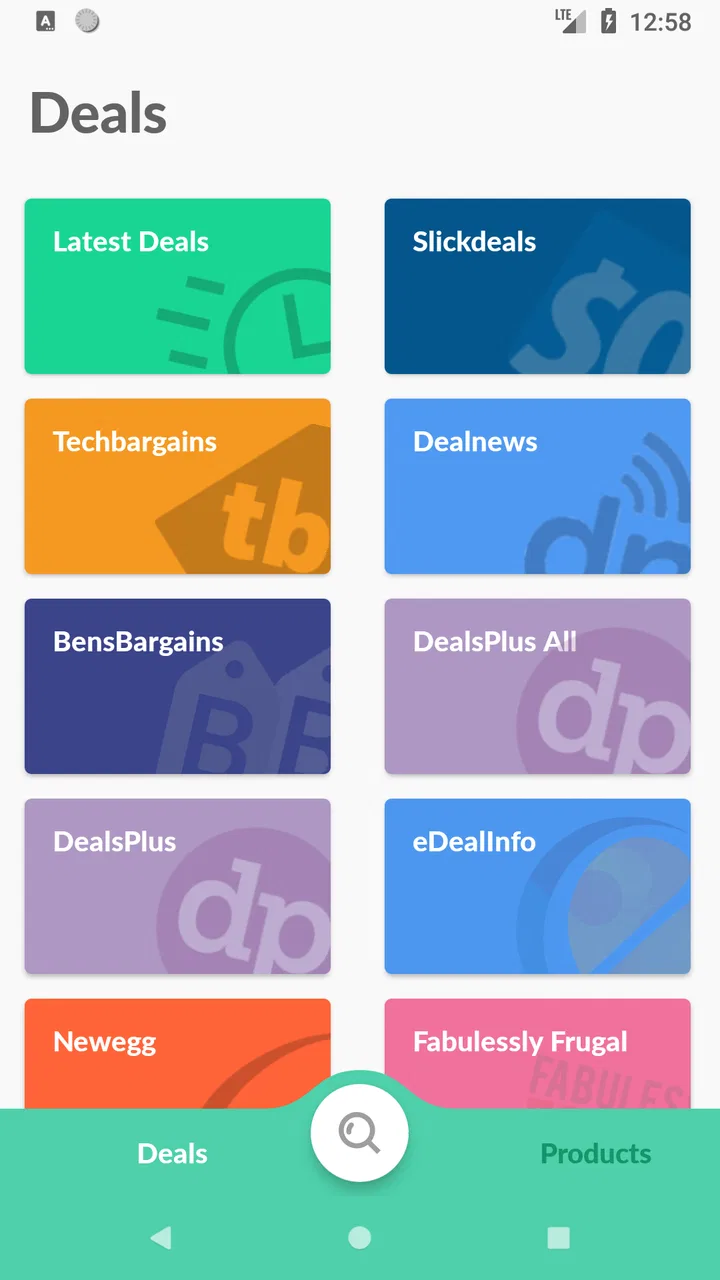
- Simple layout makes deal information easy to scan.
- Can reduce the need to check multiple stores manually.
Cons
- Deal coverage may vary depending on your country and retailers.
- Some product prices may not update immediately.
- Notifications can become distracting if many alerts are enabled.
- Limited retailer support may leave out preferred stores.
- Requires internet access to retrieve current sale information.

Dealert - Track Product Sales
Gallery